Every athlete in the world, it doesn’t matter how many times per week, works out towards a goal. That goal might be improving body image, losing weight, participating in a local race, at a regional or national level competition, world championships, or at the most extreme level in the Olympic games. No matter what the goal might be, athletes train and do the best they can to improve themselves and achieve a specific goal in the best shape possible. However, the hard part is not only training to perform at a given sporting event, but also to be prepared for incidents or negative episodes that could occur at that time. Especially when talking about elite athletes it becomes crucial to be able to adapt to unpredictable events and to adjust to different conditions [19].
This is where help from coaches and a management team comes in. When training elite athletes and helping them reach their goals in competitions, what can you do to improve their adaptability? What are the personal characteristics that need to be taken into consideration for an elite athlete to improve their performance under pressure? What are the steps that you can implement to help them achieve their goals?
In this blog post you will find:
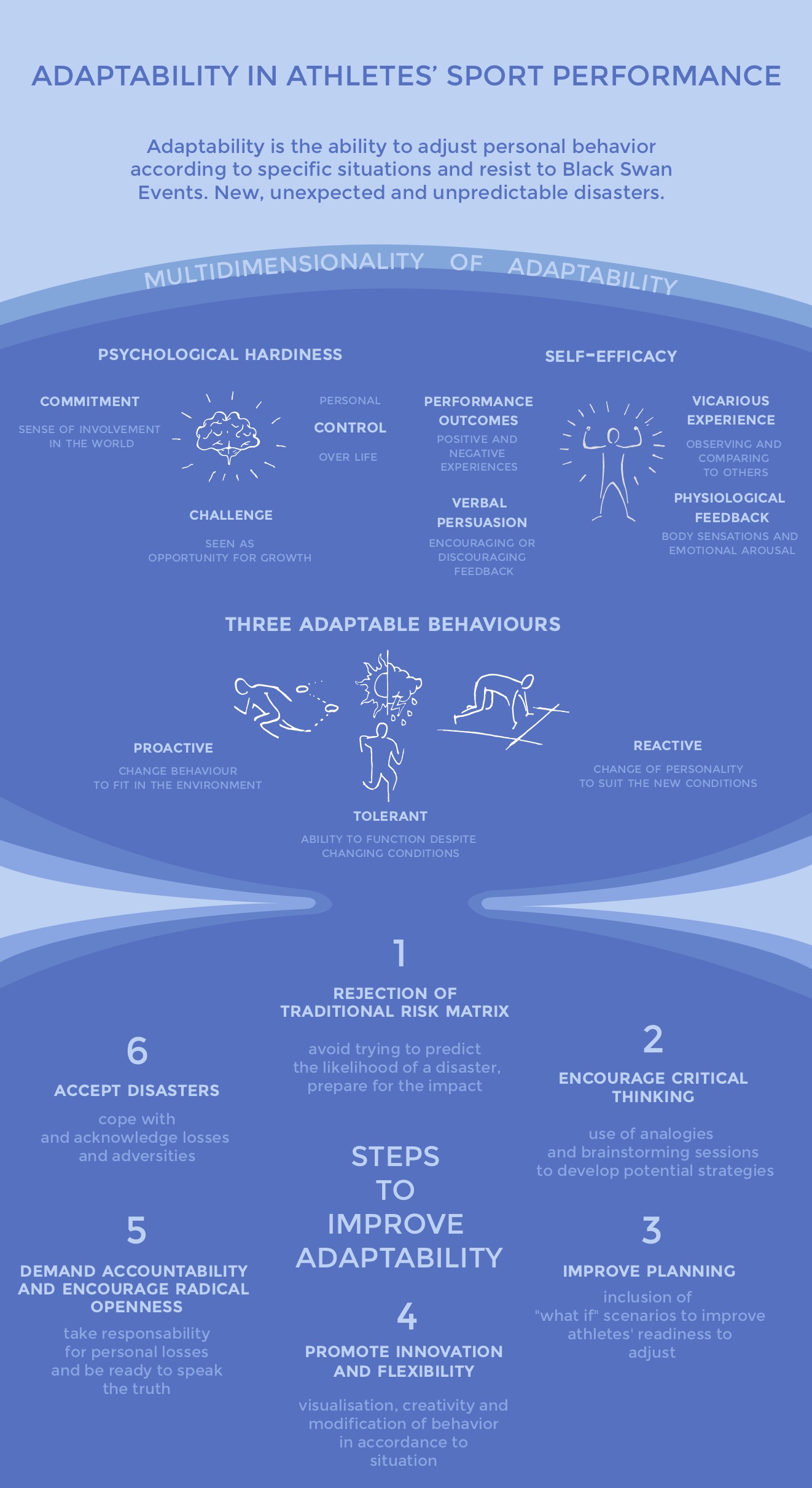
- Definition of adaptability and black swan events
- Multidimensionality of adaptability
- The 6 steps to follow to improve athletes’ adaptability
What really is adaptability?
“Adaptability is not imitation. It means power of resistance and assimilation.”
– Mahatma Gandhi
The ability to adapt to changeable conditions has been researched in working [11, 12] and military environments [4, 18] but it has yet to be researched in the context of sports performance. It is clear that it is crucial for athletes to be able to adapt to different situations, and because future events and disasters are unpredictable it is important to work on their adaptability skills. Due to our ever-changing world a need for adaptability in the workplace [13] and military [2] environments has become essential. However, this is not much different from a sporting environment where athletes fight against various types of unpredictable pressures and disasters and are required to perform under difficult conditions [10].
Black Swan Events
Black swan events have been defined by Nassim Taleb as those unpredictable, new, and unexpected events that could cause severe consequences in the environment [20]. In sporting events a change of conditions or in the environment that was not accounted for by the athletes or the team around them, could add significant stress on the situation and it might result in a lower performance. For this reason, it is important for an athlete to be able to cope with the possibility of changeable conditions.
For the purpose of this discussion we will consider a hypothetical case study of Bernardo, a rower in the Italian National Team participating at the World Rowing Championships in Sarasota, Florida where they are experiencing a heat wave. This unexpected heat is a black swan event. Bernardo is used to train in 15 degrees, and he was mentally prepared to compete in 25 degrees. Now he’s facing 35 degrees weather and it could understandably throw him off his game. However, his coach and management team took the following steps to help him prepare for any scenario. Read on to find out what they did.
How to Overcome Black Swan Events:
“You might not be able to control every situation and it’s outcomes, but you can control your attitude and how you deal with it.”
– Abhijeet Anand
Because the occurrence of black swan events cannot be predicted [14], there is a need to prepare athletes to be able to focus on the task at hand and perceive control over their actions. This is when the concept of adaptability becomes essential [6]. The coaches and the management team are key to creating a safe and stable environment around athletes. Here are some steps to follow in order to deal with stressing events [15]:
- Educate the athlete on emergency conditions
- Break down the risks into smaller chunks
- Design alternative paths to ensure a successful outcome
- Quick adjustment to adverse circumstances
In the case of Bernardo, his coach and management team, researched the area before traveling and were able to inform and educate the athlete about the potential for a changing climate. They analysed and explained the risks that competing at higher temperatures could carry as fatigue, dehydration and heat exhaustion, and were able to design an alternative plan to ensure that his performance would be successful. The plan consisted of higher consumption of liquids and snacks more frequently throughout the day to ensure that he maintained his energy levels. Because of the steps that his management team took Bernardo was able to adjust to the situation without fear or hindrance to his performance.
Multidimensionality of Adaptability
Athletes need to be able to prepare for changes in the environment and implement the necessary measure to deal with them effectively, and in a short period of time. In order to do so, it is important to understand what personality dimensions are required from an athlete for a successful sports performance.
- Psychological hardiness
The ability to adjust and resist, in terms of health and performance, to changes and unexpected events has been termed psychological hardiness [4]. Individuals that are “high-hardy” [4] are able to interpret their life experiences in a different manner than people that are not. They are able to interpret stressful situations as less threatening because they believe that they have control over them [8] and that they see them as opportunities for personal growth [2]. Psychological hardiness involves emotional, cognitive and behavioural features that help the individual to perform at their best when exposed to stress, as courage, adaptability and motivation [4].
Three attitudes of Psychological Hardiness
Commitment – interpreted as the sense of involvement of the person in the world and placing an emphasis on the meaning of their life [8]: In these cases, the individual feels like his or her life is worthwhile despite painful and disappointing events. The sense of positive engagement in life gives the individual a sense of belonging which helps to development resistance to stressful events [16]. This attitude provides a sense of confidence and internal balance that for athletes will improve their performance in a competition [4].
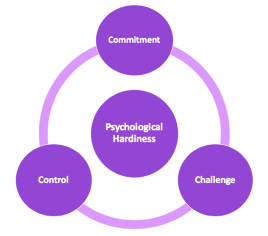
Control – this attitude is influenced by the perceived control of the individual over the stressful conditions [4]. If the athlete has the belief that they can control the stimuli that are produced by the stressful situations around them, and therefore the resulting outcomes, through their own effort they will be able to perform at their best [8]. It is important for the athletes to be aware of the fact that not every aspect of a crisis situation is controllable, but that they can control what kind of attitude they bring to the table. Entering a competition with a positive and optimistic outlook will help the athlete feel more in charge of the situation.
Challenge – the third attitude that constitutes psychological hardiness involves the way in which the individual sees the stressful event [2]. Athletes that develop hardiness when faced with a threat will be able to reframe it as a challenge and try to solve it, instead of avoiding it [4]. The athlete will be able to appreciate the changes in the environment and be motivated to grow personally by solving a problem.
For our hypothetical case study, these three attitudes were fostered by his coaches and management team before the event. Through the positive feedback from his coaches and having overcome previous challenges at a lower competitive level, Bernardo is able to retain a positive outlook and in the long term, to feel like his work is worthwhile. Because of the knowledge of the risks and the plan designed by the management team to tackle them, Bernardo is able to feel in control of the situation because he is sufficiently equipped. Thanks to the attitudes achieved in the previous two points Bernardo perceives these challenging situations as an occasion for growth.
2. Self-efficacy
Self-efficacy is the individual’s belief in his or her capabilities to succeed in a certain behaviour [3]. Because of its influence on the goal adopted by individuals and in this specific case by athletes, self-efficacy is an important predictor of sport performance [9]. It plays a mediating role in adaptiveness also because individuals with higher self-efficacy, will be more likely to engage in a certain activity they feel confident to perform in [7].
4 sources of Self-efficacy
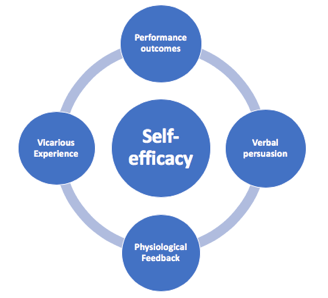
Performance outcomes, verbal persuasion, vicarious experience and physiological feedback help the individual decide the types of tasks he or she can undertake in accordance to their capabilities [17]. Nonetheless the beliefs regarding those capabilities will be positively or negatively impacted by the consequences and the outcomes of a specific behaviour and so too the level of self-efficacy will be affected [7]. Vicarious and past experiences are the most important sources of self-efficacy. For athletes like Bernardo, sport capabilities are influenced by their experiences in previous performances, but also by the observation of other athletes competing. It becomes important, in a situation of stress, for an athlete to be aware of what he or she can accomplish in the competition based on their training experience but also on past losses or wins [11]. For example, a year previous to this World Rowing Championship Bernardo did not make the National Team due to previous illnesses that weakened his athletic performance. However, he viewed this loss as an opportunity for growth and trained harder resulting in this year success. This positive outcome, as a result of his hard work, increased his self-confidence resulting in a higher self-efficacy.
3. Three behaviours to be adaptable
Previous research on adaptability in the workplace has differentiated three types of behaviours, proactive, reactive and tolerant that are at the base of an individual’s adaptability [13].
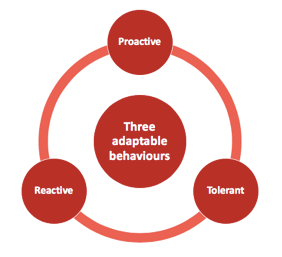
Proactive behaviour – this behaviour is characterized by individuals’ activeness in changing to fit the environment around them and to affect it positively [13]. The same can be applied to athletes: For example, the plan that the coaches and management team supporting Bernardo designed to combat the extraordinary heat conditions, positively managed his physical conditions but similarly gave him greater confidence in his ability to perform despite the black swan event.
Reactive behaviour – this type of behaviour instead takes into consideration the changes that an athlete will have to implement in their own personalities to be able to suit the new conditions [11]. An athlete like Bernardo will have to make use of his own physical and cultural capabilities to fit into the unexpected environment around him. For example, in order to achieve a successful outcome Bernardo will have to accept and expect to be fatigued sooner in the race due to the high heat and maintain a positive outlook despite his physical effort.
Tolerant behaviour – while the first two types of behaviour were implementing a sort of change in the environment or in the individual, this last one is characterized by the ability to function and behave despite the changes in conditions [13]. Thanks to the personal flexibility and openness to new experience it will be easier to cope with stress and uncertainty regarding changes and unexpected events [17]. In case of Bernardo, the coach and management team will have to help him prepare for the possibility of a lower performance and a higher racing time.
Summary of Multidimensionality of Adaptability
- Psychological hardiness
- Self-efficacy
- Proactive, reactive and tolerant behaviour
How to Improve Adaptability – What can a Coach and the Management Team do to improve an athlete’s adaptability?
After the previous overview of what adaptability is and what are its characteristics, it’s now time to talk about what steps need to be taken to help athletes improve their adaptability in performance. Due to the lack of research conducted on athlete’ adaptability in sport performance, previous recommendations followed by the American Department of Defence to adjust to Black Swan Events have been taken into consideration [6].
Step 1: Rejection of Traditional Risk Matrix
The unpredictability of black swan events calls for adaptability and adjustment of an athlete to these kinds of situations [14]. Therefore, the risk matrix that comprehends the probability of occurrence and the consequences of events would not be a good way to deal with it [6]. The management team should instead develop a plan centered on the athlete that focuses on the consequences and the capabilities of the athlete to defer and recover in these conditions. For example, the coach and management team supporting Bernardo designed the plan focusing on his strengths and abilities during the sporting performance.
Step 2: Encourage the Critical Thinking of the Athlete
While, it is important to think about the consequences that a black swan event can have on the athlete, it is also essential to encourage their critical thinking. To be able to acknowledge a critical event as such the athlete needs to be able recognize it and question it [6]. Therefore, it will be important for the management team to plan analogies, adaptive techniques and brainstorming sessions with athletes to think about how to deal with certain situations [5]. In the case of Bernardo, the management team and coach were able to identify potential strategies for him to employ during the race based on the identification of the problem. For example, if at a certain point of the race he identifies a problem with the heat he is be able to slow the pace down and still have a usable race plan.
Step 3: Improve Planning
In order for an athlete to succeed and maintain the level of performance, planning becomes an essential step [1]. The management team will have to go through the “what if” scenarios and try to analyse the actions and capabilities that will have to be developed [6]. As previously seen, black swan events cannot be predicted but it is possible to anticipate them [14]. Thanks to the implement of “what if” scenarios in the planning will help improve the athletes’ readiness to adapt and adjust to stressful events as climate change, conflictual environment or others [6]. For our hypothetical case study, the management team supporting Bernardo has designed a plan taking into consideration past events and his personal abilities to overcome challenges. By discussing, evaluating and analyzing previous successes Bernardo is now able to improve his self-confidence.
Step 4: Promote Innovation and Flexibility
To be able to resist to black swan events, however, promotion of innovation, adaptability and flexibility is another important concept that needs consideration [6]. In order to effectively overcome bad situations, the athlete needs to find a creative and innovative way to do so. Through the use of visualization of previous and possible risks the athletes will be able to use their own capabilities to advance their understanding and perspectives of these events, in addition to learning from vicarious experiences and personal success [7]. However, another important factor that needs to be highlighted is the increase in flexibility. As previously seen flexibility is the capacity to change in accordance to specific conditions and it is crucial for an athlete’s successful performance [13]. In order for Bernardo to succeed in his rowing performance the team supporting him helped him develop a range of capabilities to handle different environments. [6]. For example, his coaches and management team made him aware of different strategies that he can implement during the race and it is now up to him to be innovative and flexible in his application.
Step 5: Demand Accountability and Encourage Radical Openness
“Accountability is the engine that drives adaptability”
– Tom Ricks
In order for an athlete to be adaptable it is also important that he or she is held accountable when not successful [6]. The consequences of failing to adapt to a changing environment will bring negative consequences that will affect the athletes but also the team behind them. Therefore, holding an athlete accountable for their actions will push them to strive for success and grow individually [5]. In addition to accountability another important point that the management team will have to face with the athletes will be radical openness. To be able to find the right plan and procedure the team will have to challenge their opinions and take them all into consideration [6]. In the case of Bernardo, the consequences of not succeeding in accountability will result in not making it to the National Team the following year. However, he will also need to be open with the team regarding his own fears of not succeeding.
Step 6: Accepting Disasters
Due to the unpredictability of stressing events it is essential to be able to cope with the disasters if trying to prevent them has failed [6]. It is not easy to accept that we can’t predict every second of a competition but the acceptance of threats in the environment is essential. For this reason, the management team and coaches of the Italian National Team will nevertheless find positive points to focus on despite the losses and use them as learning opportunities for the future of the team.
Moving forward, tips for coaches and the management team:
- Be aware of the importance of adaptability and black swan events
- Concentrate on the personal characteristics of the athletes that influence his or her adaptability skills:
- Psychological hardiness
- Self-efficacy
- Affective, Reflective and Tolerant behaviours
- Implement the 6 steps to make sure that the athlete is capable of physically and mentally improve his abilities and be ready for any unexpected conditions.
References
[1] Arnold, R., Hewton, E., & Fletcher, D. (2015). Preparing our greatest team: The design and delivery of a preparation camp for the London 2012 Olympic Games. Sport, Business and Management: An International Journal, 5(4), 386–407. https://doi.org/10.1108/SBM-01-2014-0003
[2] Arthur, C. A., Fitzwater, J., Hardy, L., Beattie, S., & Bell, J. (2015). Development and validation of a Military Training Mental Toughness Inventory. Military Psychology, 27(4), 232–241. https://doi.org/10.1037/mil0000074
[3] Bandura., A. (1978). Self-efficacy: Toward a unifying theory of behavioural change? Advances in Behaviour Research and Therapy, 1(4), 211–215. https://doi.org/10.1016/0146-6402(78)90009-7
[4] Bartone, P. T., Kelly, D.R., & Matthews, M. . (2013). Psychological Hardiness Predicts Adaptability in Military Leaders : A prospective study. International Journal of Selection and Assessment, 21(2).
[5] Burns, W. R. (2013). Adaptability : Preparing for and Coping with Change in a World of Uncertainty. Institute for Defense Analyses. Retrieved from: https://www.ida.org/-/media/feature/publications/a/ad/adaptability-preparing-for-and-coping–with-change-in-a-world-of-uncertainty/p-5069.ashx
[6] Burns, W. R., & Miller, D. (2014). Improving DOD Adaptability and Capability to Survive Black Swan Events. 1st Quarte(70), 31–39. Retrieved from http://ndupress.ndu.edu/Portals/68/Documents/jfq/jfq-72.pdf
[7] Chandra, S., & Leong, F. T. L. (2016). A diversified portfolio model of adaptability. American Psychologist, 71(9), 847–862. https://doi.org/10.1037/a0040367
[8] Delahaij, R., Gaillard, A. W. K., & van Dam, K. (2010). Hardiness and the response to stressful situations: Investigating mediating processes. Personality and Individual Differences, 49(5), 386–390. https://doi.org/10.1016/j.paid.2010.04.002
[9] Feltz, D. L., Short, S. E., & Sullivan, P. J. (2008). Self-efficacy in sport. Human Kinetics.
[10] Fletcher, D., Hanton, S., & Mellalieu, S. D. (2006). An organizational stress review: Conceptual and theoretical issues in competitive sport. In Literature Reviews in Sport Psychology.
[11] Florin, G., & Bogdan C-Tin, R. (2013). Manifestation of the psychic adaptability skill in performance sport in female volleyball players of C.S. Ştiinţa Bacau. Journal of Physical Education and Sport, 13(3), 381–385. https://doi.org/10.7752/jpes.2013.03061
[12] Ginevra, M. C., Di Maggio, I., Nota, L., & Soresi, S. (2017). Stimulating resources to cope with challenging times and new realities: effectiveness of a career intervention. International Journal for Educational and Vocational Guidance, 17(1), 77–96. https://doi.org/10.1007/s10775-016-9331-0
[13] Griffin, B., & Hesketh, B. (2003). Adaptable behaviours for successful work and career adjustment. Australian Journal of psychology, 55(2), 65-73.
[14] Lybeck, E. (2017). The black swan: The impact of the highly improbable. The Black Swan: The Impact of the Highly Improbable, 1–82. https://doi.org/10.4324/9781912281206
[15] Nafday, A. M. (2009). Strategies for managing the consequences of black swan events. Leadership and Management in Engineering, 9(4), 191–197. https://doi.org/10.1061/(ASCE)LM.1943-5630.0000036
[16] Overdale, S., & Gardner, D. (2012). Social Support and Coping Adaptability in Initial Military Training. Military Psychology, 24(3), 308–326. https://doi.org/10.1080/08995605.2012.678243
[17] Pulakos, E. D., Schmitt, N., Dorsey, D.W., Arad, S., Borman, W.C., Hedge, J.W. (2002). Predicting Adaptive Performance: Further Tests of a Model of Adaptability. Human Performance, 15(4), 299-323, DOI: 10.1207/S15327043HUP1504_01
[18] Salas, E., Priest, H. A., Wilson, K. A., & Burke, C. S. (2006). Scenario-Based Training: Improving Military Mission Performance and Adaptability. In A. B. Adler, C. A. Castro, & T. W. Britt (Eds.), Operational Stress. Military life: The psychology of serving in peace and combat: Operational stress (p. 32–53). Praeger Security International.
[19] Sarkar, M., Fletcher, D., & Brown, D. J. (2015). What doesn’t kill me.: Adversity-related experiences are vital in the development of superior Olympic performance. Journal of Science and Medicine in Sport, 18(4), 475–479. https://doi.org/10.1016/j.jsams.2014.06.010
[20] Taleb, N. 2007.The Black Swan: The Impact of the Highly Improbable. New York. Random House.
 Lucrezia Fossi